31. Oktober 2017 · Kommentare deaktiviert für „L’Ofpra a mené sa première mission d’identification de réfugiés au Tchad“ · Kategorien: Afrika, Frankreich, Niger · Tags:

Frankreich beginnt im Tschad die Asylprüfung von Flüchtlingen, die bei positivem Bescheid direkt nach Frankreich ausfliegen können. Später wird das französische Asylscreening auf den Niger ausgeweitet. Diese Übernahme von Flüchtlingen nach Frankreich ist auf 3.000 Personen im Zeitraum von zwei Jahren begrenzt.

rfi Afrique | 28.10.2017

L’Office français de protection des réfugiés et apatrides (Ofpra) a mené, cette semaine, au Tchad, sa première mission d’identification de réfugiés éligibles à l’asile en France. Une délégation cet organisme français a entendu plus de 200 personnes. Il s’agit de la première mise en œuvre de la décision du président français, Emmanuel Macron, de mener, dans le Sahel, une identification de réfugiés éligibles au droit d’asile et qui éviteraient ainsi la dangereuse route illégale de la Libye et de la Méditerranée.
Weiterlesen »

30. Oktober 2017 · Kommentare deaktiviert für „Europa, die Flüchtlinge und der Zynismus des Untergangs“ · Kategorien: Afrika, Europa · Tags:

Telepolis | 30.10.2017

In der Auseinandersetzung mit Flucht und Migration setzen die europäischen Staaten auf ihre alten Strategien. Sie bauen Abschottungsmaßnahmen aus und machen Afrika zur Beute von Finanzinvestoren

Gabriela Simon

Zwei Jahre nach der großen Flüchtlingsbewegung Richtung Europa schlägt das Thema Flucht und Migration immer noch hohe politische Wellen, in Deutschland und Europa, in Berlin und in den Bundesländern, bei den Rechten und bei den Linken. Dabei hat die europäische Abschottungspolitik mit Hilfe der Türkei und nordafrikanischer Staaten die Zahl der ankommenden Flüchtlinge bereits stark reduziert. 2016 wurden noch 280.000 Menschen als Asylsuchende in Deutschland registriert, von Januar bis September 2017 nur noch 140.000, womit die Seehofersche Obergrenze in diesem Jahr wohl noch nicht einmal erreicht wird.

Die meisten derer, die 2015 in Deutschland ankamen, sind mittlerweile leidlich gut untergebracht und gehen ihre Wege in Ausbildung, in Jobs oder wirtschaftliche Selbständigkeit. Man könnte sich eigentlich entspannen und die verbliebenen Probleme der Flüchtlings- und Zuwanderungspolitik pragmatisch dem politischen Tagesgeschäft überlassen.

Weiterlesen »

30. Oktober 2017 · Kommentare deaktiviert für „Flüchtlinge in Libyen: In der Sackgasse, ohne Hoffnung“ · Kategorien: Afrika, Libyen · Tags:

Spiegel Online | 30.10.2017

Europa schottet sich ab – die Flüchtlingszahlen sinken. Doch was dieser scheinbare Erfolg bedeutet, zeigt ein Besuch in Libyen: Dort sitzen Flüchtlinge in Gefangenenlagern fest.

Aus Tripoli berichtet Francesco Semprini, „La Stampa“

In Libyen tobt eine humanitäre Katastrophe. Da ist Abu Salim keineswegs das Schlimmste, das einem Flüchtling passieren kann.

Es ist eines der wenigen Gefangenenlager in Libyen, die Journalisten gefahrlos besuchen können. Während andere Zentren im Land zum Inbegriff für Zwangsarbeit, Schlägereien, Folter und Vergewaltigung geworden sind, bietet Abu Salim so etwas wie eine Atempause für diejenigen, die wochen-, wenn nicht monatelang unterwegs waren. Es gibt eine Krankenstation, eine Küche, Schlafräume und Matratzen, Orte für Gebete.

Weiterlesen »

30. Oktober 2017 · Kommentare deaktiviert für Algeria is rounding up migrants and not saying why · Kategorien: Algerien, Niger · Tags:

Vice | 18.10.2017

By Sam Metz

Throughout neighboring Algeria, police are indiscriminately rounding up West African migrants, loading them onto buses, and transporting them thousands of miles to the country’s southern border, where they are deported to Niger. These roundups have increased in frequency and force since late August, taking place in the dead of night and during morning commutes in broad daylight. At least 500 migrants have been captured in October alone, according to a joint press release issued Tuesday by the International Federation for Human Rights and the Collectif Loujna-Tounkaranké.

The sudden surge in migrant roundups has alarmed human rights monitors throughout the region, which warn Algeria that it may be violating United Nations and African Union conventions on migrant protections. In a letter to President Abdelaziz Bouteflika, a cohort of African organizations condemned the summary deportations and the atmosphere of fear they’ve sowed in Algeria, writing, “Up until now, nobody understands the reasons behind this outbreak of psychological — and sometimes even physical — violence toward sub-Saharan Africans.”

Weiterlesen »

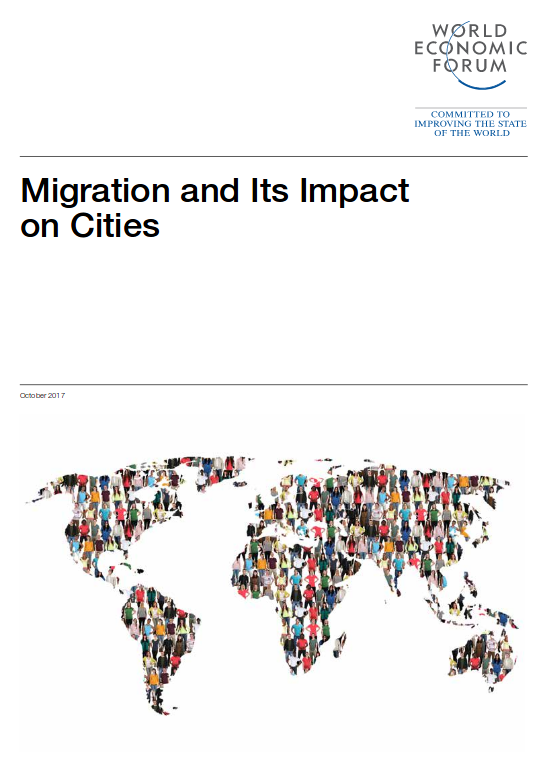
30. Oktober 2017 · Kommentare deaktiviert für Migration and Its Impact on Cities · Kategorien: Hintergrund, Lesetipps, Social Mix · Tags:

World Economic Forum | 25.10.2017 | Download pdf

The World Economic Forum has released a report taking a deep dive on migration and cities, exploring the types, causes and patterns of migration, the most affected corridors and cities, the impact on urban infrastructure and services, the solutions that can be employed and how cities can seek to future proof themselves to address this growing challenge.

The report captures the migration stories of 22 of the most affected cities around the world, including from North America (Montreal, Ottawa, Calgary, New York and Boston), Latin America (Sao Paulo and Medellin), Middle East and North Africa (Dubai, Amman, Ramallah), Sub Saharan Africa (Cape Town and Dakar), Asia (Pune, Surat, Guangzhou and Davao City), Europe (Berlin, Athens, Paris, Amsterdam and Rotterdam) and Oceania (Auckland). The report also presents a high level framework to achieve long term migrant integration and in delivering urban infrastructure and services efficiently and effectively to meet the needs of migrants.

Key highlights of the report can be found here.

You can download the entire report here (High resolution) or here (Low resolution).

30. Oktober 2017 · Kommentare deaktiviert für Essay: Life After the Jungle, the Route That Will Not Close · Kategorien: Frankreich, Großbritannien, Lesetipps, Schengen Migration · Tags:

Refugees Deeply | 25.10.2017

On the anniversary of the demolition of the Calais Jungle camp, Behzad Yaghmaian reflects on the stories of the migrants who continue to flock to the area and who are taking riskier and more expensive journeys across the English Channel to the U.K.

Behzad Yaghmaian

On a midsummer night, three young Iranians pushed a small boat out to sea on the French coast a few miles from Calais. It was midnight and there were no guards around to stop them.

Using a small inflatable dinghy and two oars they had bought for 600 euros ($705), the men started a journey into the rough waters of the English Channel on July 18. They were attempting the unimaginable. There is a reason Calais is not known for migrants risking their lives by boat. The waterway is too rough to cross without a motorboat – which is hard to get in France, even for well-connected smugglers.

One of the trio, Saman, a slim 28-year-old university graduate, did not know how to swim. To be on the safe side, the others had bought him what they described as a “cheap Chinese life jacket.” Saman made a quick call to his elderly mother in Iran. “I will call you soon from England,” he told her, before joining the other two men on the boat. They began rowing.

Weiterlesen »

30. Oktober 2017 · Kommentare deaktiviert für „How Europe exported its refugee crisis to north Africa“ · Kategorien: Afrika, Europa, Italien, Libyen · Tags:

The Guardian | 30.10.2017

Fewer people are crossing the Mediterranean, but a nightmarish bottleneck has been created instead

Something happened to the deadly migrant trail into Europe in 2017. It dried up. Not completely, but palpably. In the high summer, peak time for traffic across the Mediterranean, numbers fell by as much as 70%.

This was no random occurrence. Even before the mass arrival of more than a million migrants and refugees into Europe in 2015, European policymakers had been desperately seeking solutions that would not just deal with those already here, but prevent more from coming.

From Berlin to Brussels it is clear: there cannot be an open-ended invitation to the miserable millions of Europe’s southern and eastern periphery.

Weiterlesen »

30. Oktober 2017 · Kommentare deaktiviert für „Gleichförmig und multimedial“ · Kategorien: Deutschland, Mali · Tags:

German Foreign Policy | 30.10.2017

Die Bundesregierung macht die kriegerischen Aktivitäten Deutschlands in Mali zum Schwerpunkt ihrer militärpolitischen Propaganda. Erst kürzlich startete auf dem Youtube-Videokanal der deutschen Streitkräfte eine Serie über in dem westafrikanischen Staat stationierte Bundeswehrsoldaten. Fast zeitgleich wurde in den Berliner Räumlichkeiten des Auswärtigen Amts eine Ausstellung über die deutsch-malischen Beziehungen eröffnet. Während die Youtube-Serie auf die Rekrutierung militärischen Nachwuchses abzielt, präsentiert die Exposition Deutschland als „verlässlichen Partner“ beim „Kapazitätsaufbau der malischen Sicherheitskräfte“. Zudem veröffentlicht das Bundesverteidigungsministerium beinahe täglich Propagandameldungen über die Operationen deutscher Truppen in Mali. Analog zur Youtube-Serie erscheinen die eingesetzten Soldaten hierbei als Kämpfer im Dienste der „Friedenssicherung“, die selbstlos „Staub, Dreck und extremer Hitze“ trotzen. Umgekehrt weisen die in diesem Zusammenhang angebotenen „Hintergrundinformationen“ zahlreiche Parallelen zu den Werbetexten der Youtube-Serie auf.

Weiterlesen »

29. Oktober 2017 · Kommentare deaktiviert für Dans une lettre poignante, ces migrants tunisiens bloqués à Lampedusa dénoncent l’injustice des politiques migratoires · Kategorien: Italien, Tunesien · Tags: ,

After the increasing number of migrants reaching Italy from Tunisia during the last 2 months, the Tunisian and Italian governments had „a deal“ and they accelerated the process of deportation, they deported 120 during the last week and they intend to deport more during the next weeks.

The Tunisians in Lampedusa are kept in inhuman and difficult conditions in detention centers and the italian authorities preparing to deport them.

Since two days most of them are in a hunger strike and their health condition is getting worse every hour. They wrote different statements refusing the deportation and asking for their right to stay and for the freedom of movement. Their Families in Tunisia are protesting and asking for the same things.

Huffpost Tunisie | 28.10.2017

„Nos rêves ne sont pas différents de la jeunesse européenne qui jouit d’une liberté de mouvement dans notre pays et ailleurs, à la recherche d’autres expériences mais aussi pour promouvoir la liberté, la justice sociale et la paix“.

Weiterlesen »

29. Oktober 2017 · Kommentare deaktiviert für „Emigration clandestine, une forme de résistance“ · Kategorien: Tunesien · Tags:

Nawaat | 19.10.2017

La semaine dernière, j’ai parlé de cette affaire qui nous a tous révoltée : la mort et la disparition de plusieurs dizaines de jeunes qui avaient tenté de quitter le pays à bord d’une frêle embarcation. Ils seraient peut-être aujourd’hui heureux d’être ailleurs, triomphants mais inquiets, certes confrontés à de nouvelles incertitudes mais bien aises d’avoir réussi leur évasion si leur petit rafiot délabré n’avait étrangement été percuté par un navire militaire chargé de la surveillance des frontières maritimes.

Sadri Khiari

Le drame a suscité de nombreux commentaires qui m’incitent à en dire encore un mot. Il est courant quand on évoque l’émigration clandestine de rappeler les conditions sociales, politiques, culturelles qui disposent tant de jeunes tunisiens à affronter une fois, deux fois, dix fois, l’aventure périlleuse de la « 7ar9a ». Le mot qui revient le plus souvent pour expliquer leur motivation est le « désespoir ».  Je ne discuterai pas de la pertinence de ce type d’analyses, tout à fait opportunes pour pointer du doigt la responsabilité de nos gouvernants et sans doute pour une part justifiées. Elles tiennent plus cependant du genre de décryptages auxquels s’adonne (parfois utilement) la sociologie, voire la psychologie, que de l’analyse politique proprement dite, c’est-à-dire de l’analyse qui est au cœur du combat. Mais ce que je leur reprocherai surtout, c’est qu’en se concentrant sur les raisons qui s’imposent aux volontaires pour la « 7ar9a », en faisant de leur vouloir la simple expression du désespoir, on les ampute de leur dignité. Ces jeunes, prêts à traverser la Méditerranée sur de vieux Zodiacs de croisière complètement pourris, seraient finalement des êtres passifs, victimes du pouvoir, victimes des « passeurs », victimes de leur propre désespoir.

Weiterlesen »