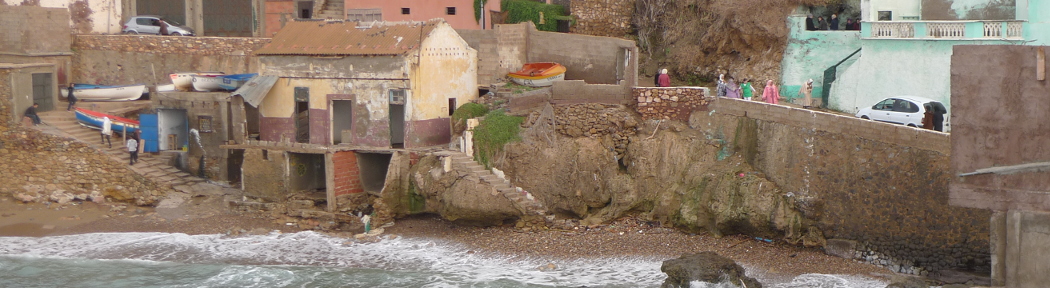
Im südspanischen Abschiebeknast Algeciras werden vor allem Harragas / Boat-people aus Marokko, Algerien und westafrikanischen Ländern festgehalten.
Die Menschenrechtsorganisation APDHA legt einen ausführlichen Bericht dazu vor, download:
cie algeciras 2012
Erecting a ghost town in the desert
Haaretz, Gili Cohen, 11 December 2012
http://www.haaretz.com/news/features/erecting-a-ghost-town-in-the-desert.premium-1.483992
Israel has invested more than NIS 200 million in establishing a detention center for African migrants. Too bad so few of them are coming. Somewhere in the western Negev, between two military bases, the Israeli bureaucracy has vanished. It’s rare to find a construction project in this country where only 10 days separate the decision and the start of work.
Still, despite the investment of millions of shekels, the place remains desolate – just a rusted perimeter fence, a second fence with dangling barbed wire, guard towers, and row after row of green tents. Welcome to the detention facility called the tent city for African migrants, built by the Defense Ministry.

Uprising in Komotini detention center now!
Published on November 23, 2012
Following the events of last Sunday in Corinth detention centre, on Friday 23 of November, the detainees of Komotini started an uprising to protest against detention and demand freedom. Left.gr reported that repeated gun shots have been heard from within the prison and smoke was seen. Parliamentarians form Syriza are heading towards the prison to see what is going on after the police confirmed the information on an uprising. Extra police forces are on their way to “control” the situation.
Die algerische Polizei (DGSN) in der Region Oran erhält ein Zentrum zur Bekämpfung der „illegalen Immigration“. Es soll nicht nur der Fahndung dienen, sondern auch als „Dispositiv“ genutzt werden – wird es ein Abschiebegefängnis?
Le Quotidien d’Oran, 24.11.2012
Wie Mediapart aufgrund eines Reports von Menschenrechtsorganisationen am 20.11.2012 berichtet, befinden sich die tunesischen Staatsangehörigen im Jahr 2011 an 1. Stelle in den Abschiebegefängnissen Frankreichs.
5.474 TunesierInnen wurden in französischen Abschiebegefängnissen festgehalten, damit wuchs ihr Anteil im Vergleich zum Vorjahr von 9,5 auf 22,6 Prozent. An 2. und 3. Stelle befinden sich Staatsangehörige aus Marokko und Algerien.
In dem Report sieht man in diesen Fakten die Antwort Frankreichs auf die Revolution in Tunesien.
Die Abschiebeknäste in Algeciras und Tarifa, in die die verhafteten Boat-people in Andalusien gebracht werden, sind masslos überfüllt. Die Haftbedingungen sind auch nach offiziösen Darstellungen menschenunwürdig.
http://infomobile.w2eu.net/
European Court of Human Rights rulings against Greece for detention conditions 2012
Published on November 8, 2012
The European Court of Human Rights ruled against Greece in the case of the 29-year-old Chinese Luping Lin, for ill-treatment during detention in Elliniko prison near by Athens in 2010. The European Court of Human Rights has ordered Greece to pay the Chinese citizen 5,000 euros in compensation after wrongly arresting him in Athens and mistreating him during detention. The 29-year-old had entered the country legally in 2006 and obtained a residence permit but was arrested and deported four years later.
kathimerini (in greek)
Weiterlesen »
„In my country there are troubles right now. Why do they put me in this centre? My family in Libya was affected a lot by the war in Libya. My brother was burnt alive and my father was killed. I escaped from Libya because of the war and I got to Tunisia. From Tunisia I left for Italy. – Interview 22“
We are pleased to announce the publication of the International University College of Turin report „Betwixt and Between: Turin CIE. A human rights investigation into Turin immigration detention centre. This report examines the extent to which Italian, European and international human rights and migration law is applied in Turin centro di identificazione ed espulsione (Turin CIE); an immigration detention centre in northern Italy.
Question Time in the German Bundestag on 24 October 2012 (13.35 to 15.35 hrs)
Answered by Minister of State Cornelia Pieper
Question no. 33
Andrej Hunko, Member of the Bundestag
The Left Party parliamentary group
Question:
What additional information does the Federal Government now have about EU financial support for the construction and/or renovation of Greek detention centres for people facing deportation or other reception facilities (including for the temporary accommodation of Syrian refugees), which in April 2012 the Federal Government said it largely had no knowledge of in its answer to my written question 7, Bundestag printed paper 17/9307, and my oral question 63 (record of plenary proceedings 17/177); and what funds or other forms of support from the EU and its Member States are being or have been, since 2011, made available or used for the renovation, restructuring and construction of such facilities or, in connection with this, the establishment of new police units and police stations throughout the country?
Answer:
The Greek government’s National Action Plan on Asylum Reform and Migration Management, which provides for the construction of reception facilities, among other measures, receives financial support from the EU Commission in the form of 9.8 million euros in emergency funding from the European Refugee Fund. The European Union is providing personnel and non-financial support for the implementation of the National Action Plan via the European Asylum Support Office (EASO) and the European Commission. For example, EASO is deploying asylum support teams composed of officials from the EU Member States. Frontex, the EU border agency, is supporting Greece in the field of border management. In addition, funding from the EU External Borders Fund and the European Return Fund, among others, is available for Greece. According to the European Commission, which manages these funds, Greece has not yet submitted complete plans for all planned facilities, meaning that the EU’s financial contribution cannot yet be specified exactly.
To date, Greece has only applied for EU funding for individual projects: funding for the construction or renovation of reception centres in Filakio, Orestiada and Karoti from the EU External Borders Fund, for example, or funding for detention facilities in Athens, Elliniko and Aspropyros from the European Return Fund.
In this context, Germany will support proposals at the European Union’s Justice and Home Affairs Council on 25-26 October 2012 to make it significantly easier for Member States experiencing economic difficulties, such as Greece, to access funding from EU funds such as the External Borders Fund and the Return Fund by reducing the required national co-financing rate.
The Federal Government is also actively participating in support for Greece in the framework of the EU assistance coordinated by EASO, by sending experts from the Federal Office for Migration and Refugees (BAMF) to Athens, and at bilateral level by sending a BAMF liaison officer to Greece. Additionally, both in the framework of Frontex and on a bilateral basis, officers from the Federal Police are being sent to Greece and technical support for border surveillance is being made available.
The assistance provided by Germany or by the EU funds specified above is not intended as support for the establishment of new police units or police stations as such.